

Picture two factories. Same machines, same order book, same size crew. Both start up at six on Monday morning.
By Friday afternoon, the German factory has finished the week's work. The last pallet is wrapped, the lights go off, and everyone goes home for the weekend.
The British factory isn't done. To make the same amount, it needs another full day.
It needs Saturday.
That extra day isn't made up. In 2024, output per hour was about 20% higher in Germany than in the UK, and about 10% higher in France. Hour for hour, a German worker produces in five days what a British worker produces in six. A French worker does in ten days what we do in eleven.
Those figures are averages across each whole economy, not measurements from two real factories. But the gap is real, and it's been there a long time.
That's an odd place for the country that invented the factory to find itself: a day behind.
It started here
In 1771, Richard Arkwright built a water-powered cotton mill at Cromford in Derbyshire. Machines, workers and shifts, all under one roof, all running to the same clock. The Derwent Valley is often called the birthplace of the factory system.

What came next is the story every British engineer grows up with. Watt's steam engine. Bessemer's steel. Railways laid across continents with British-made rails and British-built locomotives. For the best part of a century, if you wanted to know how to make things, you came here to find out.
Our technology was so far ahead that it was illegal to export it. Textile machinery and its designs couldn't leave the country, and skilled mechanics weren't allowed to either.
In 1789, a young Derbyshire apprentice called Samuel Slater did it anyway. He'd learned the trade in the mills of the Derwent Valley, memorised the designs and sailed for America. Four years later, he had a mill running in Pawtucket, Rhode Island. America remembers him as the founder of its cotton industry.
Back in Derbyshire, they called him Slater the Traitor.
It's a story that keeps repeating. Today, it's Washington worrying about its technology crossing borders. Two centuries ago, it was Westminster.
The ban didn't work then, and history suggests it rarely does. Britain's lead didn't last because we locked the designs away. It lasted as long as we kept making better ones.
That's the real reason Britain led. Not the most people, the most money or the most coal. Plenty of places had those. We led because we kept changing how we worked. Every generation of mill owners, ironmasters and engineers looked at what they'd inherited and asked how to make it better. Water gave way to steam. Hand tools gave way to machine tools. The factory that stood still got overtaken by the one down the road that didn't.
Evolving was the whole point. It was in our DNA.
Somewhere, we stopped
Fast-forward to today, and the picture looks different.
Britain is now the world's 11th-largest manufacturer, behind France, Italy and Brazil. Germany's factories produce nearly three times what ours do.
In 2024, Germany installed 26,982 industrial robots. Britain installed about 2,500. Roughly ten to one. Italy, which trails us on output per hour, has more than three times as many robots at work as we do.
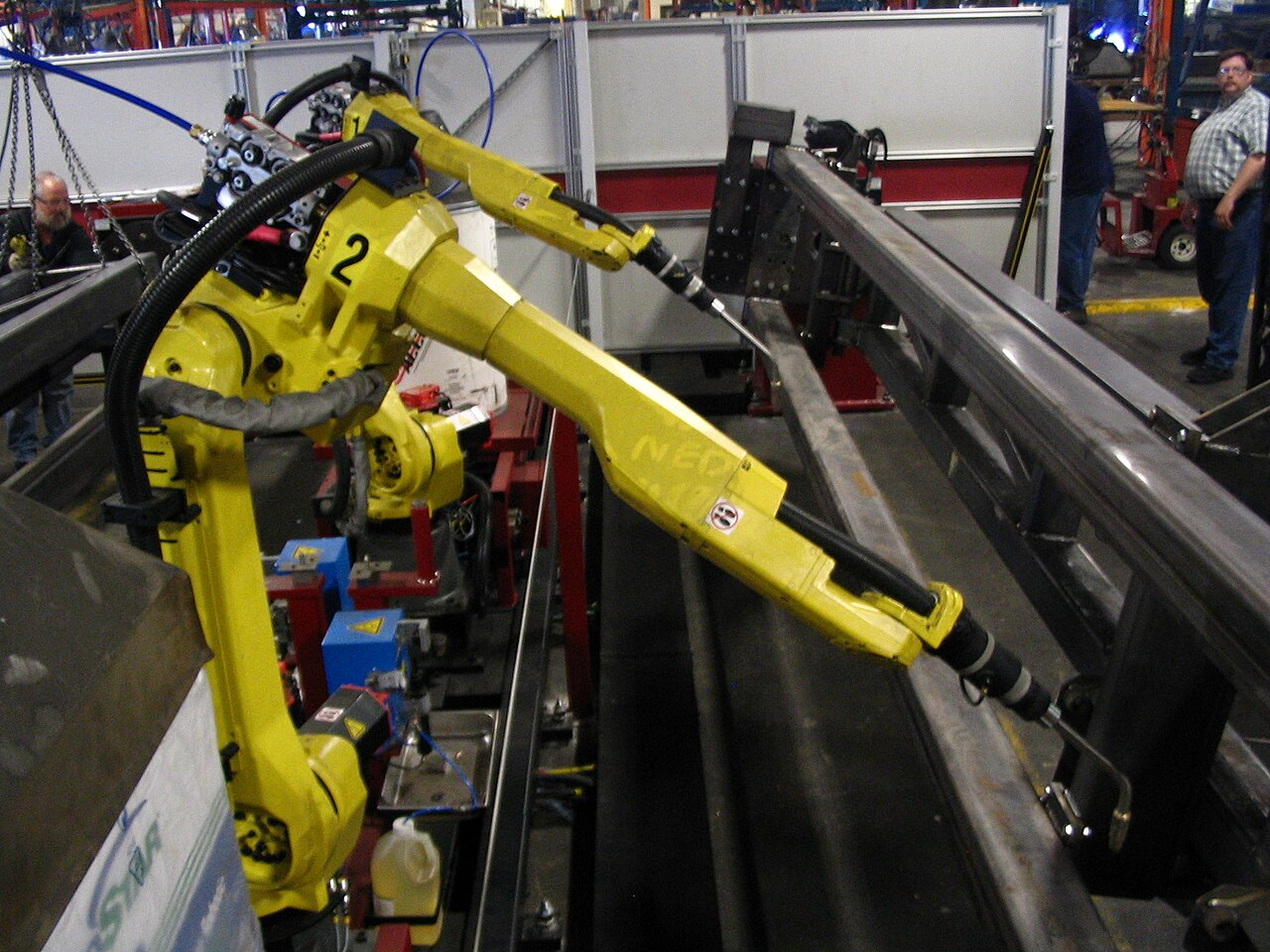
When British firms do invest, it doesn't tend to last. UK robot installations hit a record in 2023, on the back of the super-deduction tax break. The following year, they fell by more than a third. Across the whole economy, UK business investment is the second-lowest in the G7.
Too often, we evolve when someone pays us to.
That's a risky way to run a factory. Tax breaks come and go with every budget, under governments of every colour. Grants run out. Schemes get renamed. A factory that only modernises when Westminster sweetens the deal will always be one budget behind the firms that don't wait.
Nobody in Westminster is going to close the gap for us. The next move has to come from the factory floor.
None of this is new, either. Revised ONS figures suggest the productivity gap may go back further than the 2008 crash. No single bad decade explains it. Somewhere along the way, we got out of the habit of evolving.
It isn't about working harder
Here's the part that should give every British manufacturer some hope.
The gap isn't about effort. Germans work fewer hours a year than we do. British workers aren't lazy, and British factories aren't short of skill or pride. The difference is what each hour produces.
And the evidence says most of that difference isn't in our best firms. It's in the rest.
When researchers first compared management practices across the US, Germany, France and the UK in the mid-2000s, the UK came last. The cause wasn't weak leaders at the top. It was a long tail of firms that were poorly run. German and French firms were ahead on shop-floor practice, including how closely they monitored production.
The same pattern shows up in today's UK data. Among the best-managed tenth of firms, 88% use at least one advanced technology. Among the worst-managed tenth, it's 51%. Firms with below-average management are four times more likely to make decisions with little or no data analysis.
Put simply, a lot of British factories can't see where their hours go.
The idle hour
Every factory has hours like this. The machine waiting for material. The changeover that ran twenty minutes long. The stop nobody logged because it only lasted ten minutes, then happened again after lunch, and again on nights.
On their own, they're nothing. Nobody gets called into the office about a ten-minute stop. But add them up across a shift, a week and a year, and across thousands of factories, and we think they're a big part of that Saturday.
That's the idle in "evolve or idle". It isn't a factory switched off. It's a factory running at a fraction of what it could, without anyone quite knowing why.
The world is speeding up
Here's the part most people skip.
None of the new technology, whether AI, robotics or automation, works without data from the floor.
AI doesn't know your factory. It learns from what your machines tell it. If nobody is recording when they run, when they stop and why, there's nothing for it to learn from. Point the smartest AI in the world at a whiteboard and a Friday spreadsheet, and it will give you confident answers to the wrong questions.
Robots have the same problem. Put one on the wrong machine and it just makes parts faster for the next bottleneck to queue up. Without knowing where your hours are really lost, you're choosing where to spend a serious sum on a hunch, and you'll have no way of proving afterwards whether it paid off.
Even simple improvements need a baseline. You can't improve what you've never measured, and you can't show the board it worked if you don't know where you started.
That's why production monitoring has to come first. It isn't one technology among many. It's the foundation the rest are built on. It turns the hours on your floor into data, and data is what every other tool runs on.
Skip it, and every investment after it is a guess. Start with it, and every investment after it gets smarter.
Where evolving starts
Evolving doesn't mean a lights-out factory by Christmas. It doesn't mean a seven-figure robotics budget, either.
It starts with seeing where your hours go.
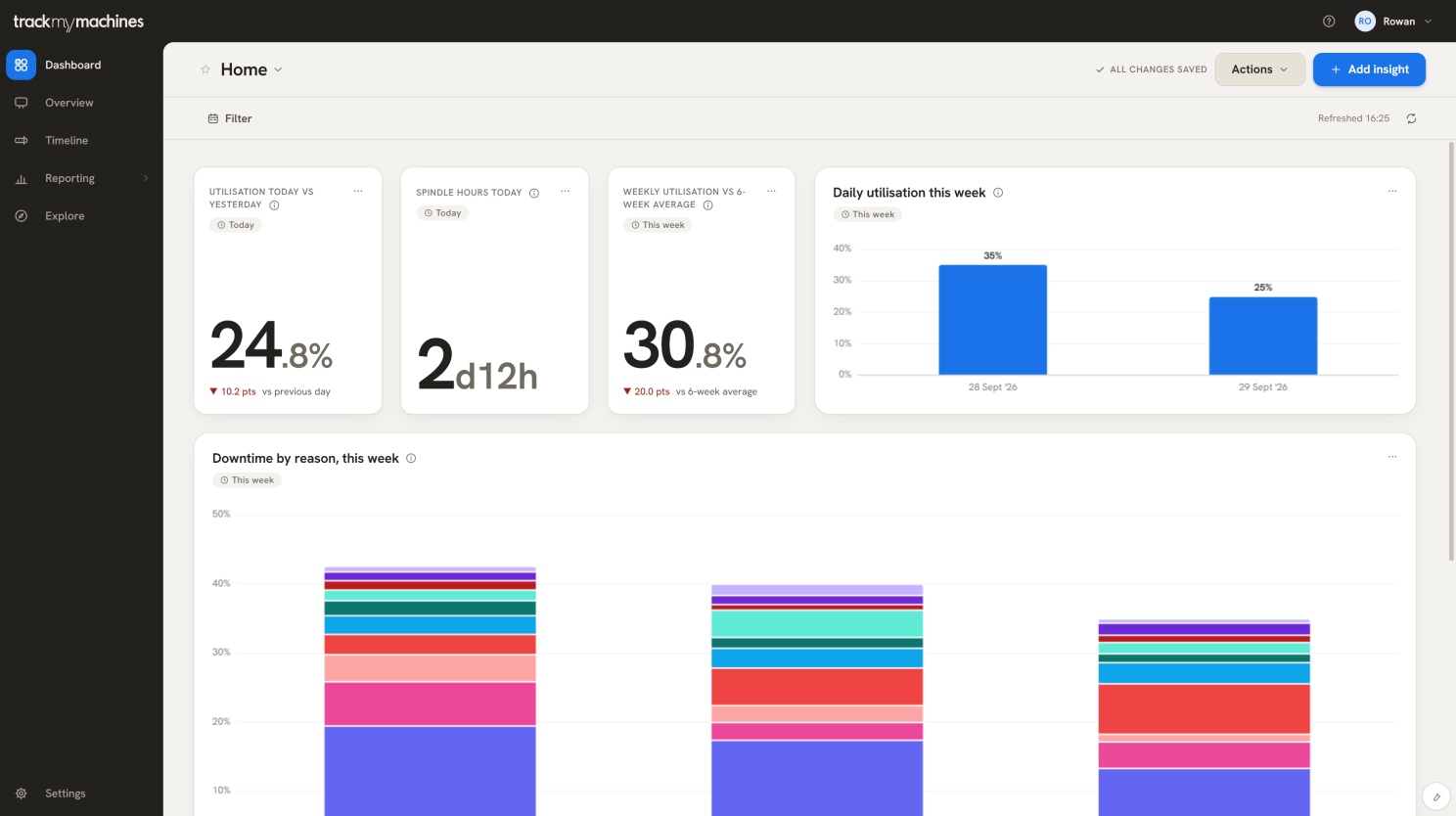
That's what production monitoring does. It connects to the machines you already have, old and new, and shows you what they're actually doing: when they run, when they stop, and why. Not what the whiteboard says at the end of shift, or what someone remembers on Monday morning. What happened.
It sounds simple. It changes a lot.
- The ten-minute stops become visible. Once they're counted, they stop hiding. Patterns appear that nobody could see from the floor: the same machine, the same time of day, the same reason.
- Morning meetings start with facts. Instead of three people with three versions of yesterday, everyone looks at the same numbers and gets on with fixing things.
- You know your real capacity. Before you hire, add a shift or buy another machine, you can see whether the capacity you need is already sitting idle.
- Investment goes where it counts. When you do bring in automation, robotics or AI, you know exactly where the constraint is, and you can prove the payback afterwards. That's a much easier conversation with the board than a gut feeling.
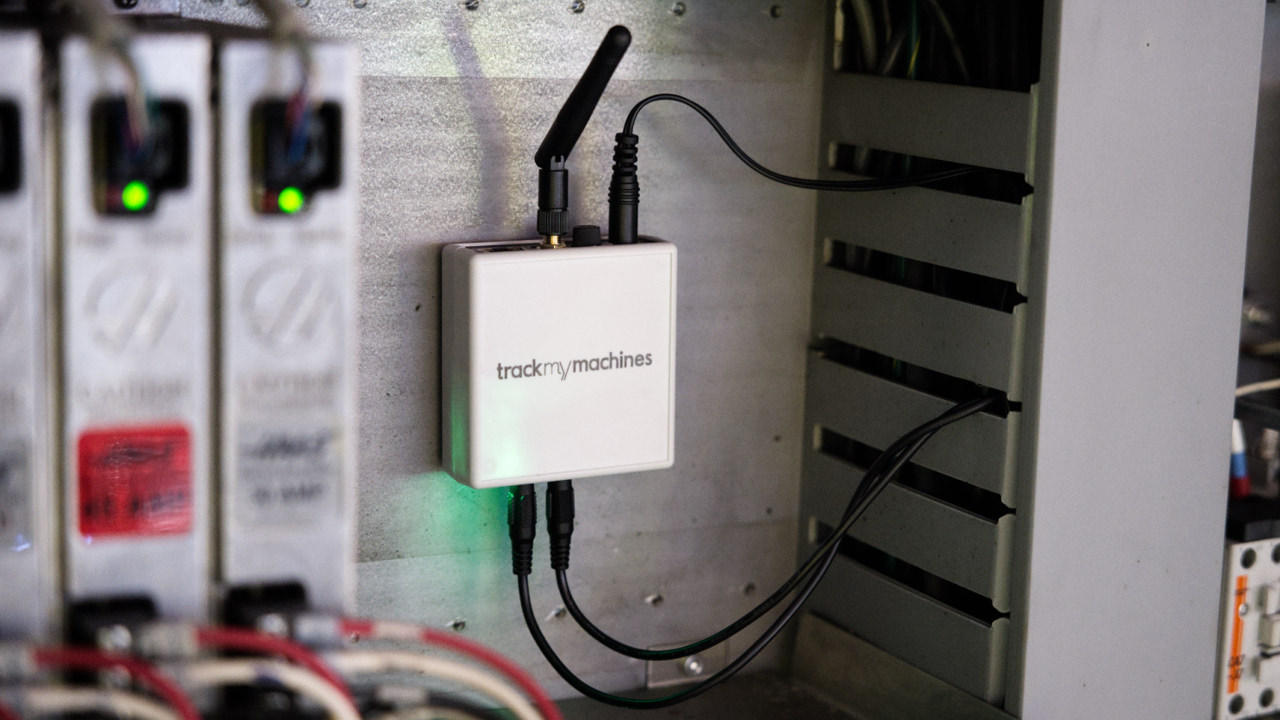
That's the job we built TrackMyMachines to do. It's a small piece of hardware that fits to almost any machine and collects part counts, cycle times, downtime and the reasons behind it, utilisation, OEE and energy use. If you'd rather keep your data on site, or you just don't like subscriptions, it runs on-premise too.
Remember that Saturday shift? Here's the maths I'd ask any MD to try. TrackMyMachines starts from £55 per machine per month. That's probably less than one operator's Saturday overtime. For that, you see every stop, every slow cycle and every idle hour on that machine, with the reasons attached. Most factories find hours they didn't know they had.
The goal isn't to work more Saturdays. It's to stop needing them.
Across the UK, firms that adopt technology generate around a fifth more turnover per worker, even after accounting for how well they're run. The ONS is careful to call that a link, not a guarantee, and so are we. But it's a link the best factories in Europe have been acting on for years.
We've done this before
It's easy to read these numbers and feel like the story's over. It isn't. But it won't turn itself around.
Arkwright didn't invent water power. Water wheels had been turning mills for centuries before Cromford. What he did was take the tools of his day, combine them with new machines, and build a way of working nobody else had. That was the edge. Not the parts, but what he made of them.
The tools of our day are sitting right in front of us. Production monitoring that shows every hour on the floor. Robots that are cheaper and easier to deploy than ever. AI that can read a factory's data and point at the problem worth fixing first. Every manufacturer in the world can buy them, and our competitors already are.
Buying them isn't the edge. What we build with them is.
Nobody knows a British factory like the people who run it. The fitter who can hear a bearing starting to go. The setter who knows which machine sulks on a cold morning. Decades of know-how that no competitor can copy. Put that knowledge together with real data, and you get something that's yours alone: a factory that learns faster than the one down the road, and faster than the one in Stuttgart.
That's how we evolve. Not by copying Germany, and not by waiting for Westminster. By taking the best tools of our time and making them our own, the way we did the first time round.
It starts with one step: see where your hours go. Then fix the biggest loss. Then the next one. Then invest where the data tells you to, and keep going.
The factories that start now will be setting the pace in ten years' time. The ones that wait will still be working Saturdays.
Start on Monday. Finish on Friday.
Evolve or idle.
References
- Resolution Foundation, Revision of labour, September 2026 (analysis of revised ONS data). https://www.resolutionfoundation.org/publications/revision-of-labour/
- UNESCO World Heritage Centre, Derwent Valley Mills. https://whc.unesco.org/en/list/1030/
- Encyclopaedia Britannica, Samuel Slater. https://www.britannica.com/print/article/548126
- New England Historical Society, Flashback Photo: Sam Slater's Wildly Successful Startup, 1790. https://newenglandhistoricalsociety.com/flashback-photo-sam-slater-wildly-successful-startup-1790/
- US Department of Commerce, Bureau of Industry and Security, Commerce Releases Clarifications of Export Control Rules…, April 2024. https://www.bis.gov/press-release/commerce-releases-clarifications-export-control-rules-restrict-prcs-access-advanced-computing
- Make UK, Manufacturing – The Facts 2025 (2023 output data), as reported by The Engineer. https://www.theengineer.co.uk/content/news/uk-manufacturing-rises-in-global-rankings
- International Federation of Robotics, World Robotics 2025. https://ifr.org/ifr-press-releases/news/global-robot-demand-in-factories-doubles-over-10-years
- House of Commons Library, Economic indicators: Productivity (SN02791), May 2026, using OECD data for 2023. https://researchbriefings.files.parliament.uk/documents/SN02791/SN02791.pdf
- International Federation of Robotics, World Robotics 2024, UK press release (2023 data). https://ifr.org/downloads/press2018/2024-SEP-24_IFR_press_release_World_Robotics_2024_-_UK.pdf
- IPPR, Revealed: UK business investment second lowest in G7, April 2026 (analysis of OECD data). https://www.ippr.org/media-office/revealed-uk-business-investment-second-lowest-in-g7
- OECD, Compendium of Productivity Indicators 2025. https://www.oecd.org/content/dam/oecd/en/publications/reports/2025/06/oecd-compendium-of-productivity-indicators-2025_f1a7de9f/b024d9e1-en.pdf
- Bloom & Van Reenen, Measuring and Explaining Management Practices Across Firms and Countries, NBER / QJE 2007. https://www.nber.org/system/files/working_papers/w12216/w12216.pdf
- ONS, Management practices and the adoption of technology and artificial intelligence in UK firms: 2023, March 2025. https://www.ons.gov.uk/economy/economicoutputandproductivity/productivitymeasures/articles/managementpracticesandtheadoptionoftechnologyandartificialintelligenceinukfirms2023/2025-03-24
- ONS, Management practices in the UK: 2016 to 2023, May 2024. https://www.ons.gov.uk/economy/economicoutputandproductivity/productivitymeasures/bulletins/managementpracticesintheuk/2016to2023/pdf