
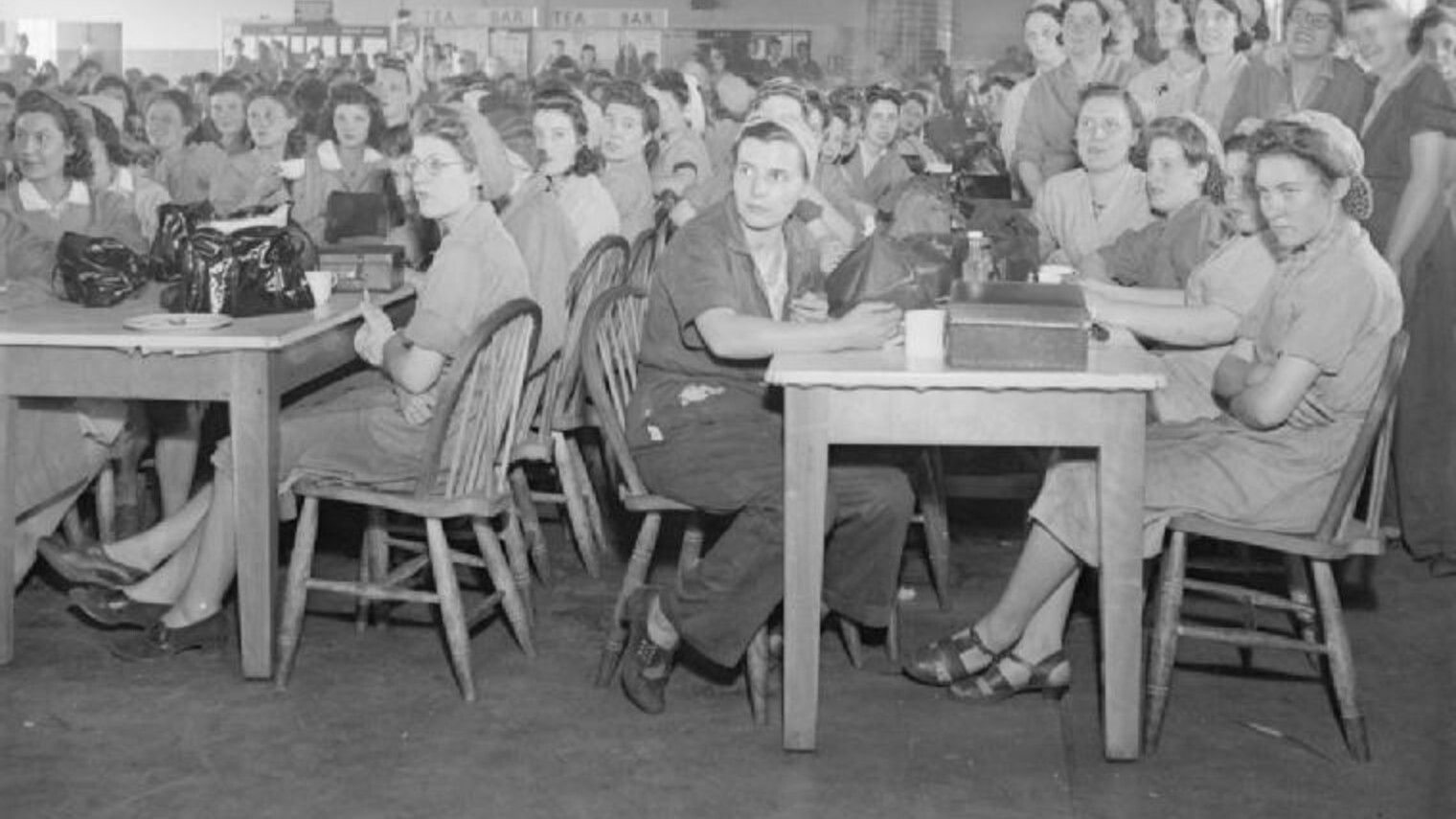
In 1943 the munitions factory at Glascoed in South Wales ran all day and night. More than 12,000 people kept it going, split across three shifts. Two railway stations were built just to get them to the gate. Women made up most of the 150,000 who filled shells across Britain at the 1942 peak.
On 20 November, BAE Systems opened a new shell-filling plant on the same site. Robots and driverless vehicles do the filling and the carrying. BAE puts the investment at £180 million and the gain at 16 times the capacity for 155mm shells. Its release says the plant needs few people, which allows "greatly expanded production hours and output".
So Glascoed will run long hours again. This time it won't take 12,000 people. Around 500 work on the whole site today.
We don't celebrate that. A factory is its people, and nobody at TrackMyMachines dreams of rapidly emptying ones.
But it is where manufacturing is heading, and pretending otherwise helps nobody. The work of feeding a process all shift will go first. It already has in Japan, Korea and Germany, and it will here.
Britain is catching up, not leading
It would be easy to read Glascoed as Britain out in front, but looking around the world that's not exactly the case.
Japan's FANUC stopped needing the lights in 2001. A day's output there is about 50 new robots, all assembled by other robots, and a month can pass with nobody on the floor. That was 25 years ago.
Germany moved sooner and bigger on shells. Fifteen months was all Rheinmetall needed to build its plant at Unterlüß, for nearly €500 million. Its target is up to 350,000 rounds a year from 2027. BAE hasn't published an annual figure for Glascoed. The Guardian's understanding in 2025 was a starting point of 3,000 to 5,000 shells a year, which would put 16 times at about 80,000.
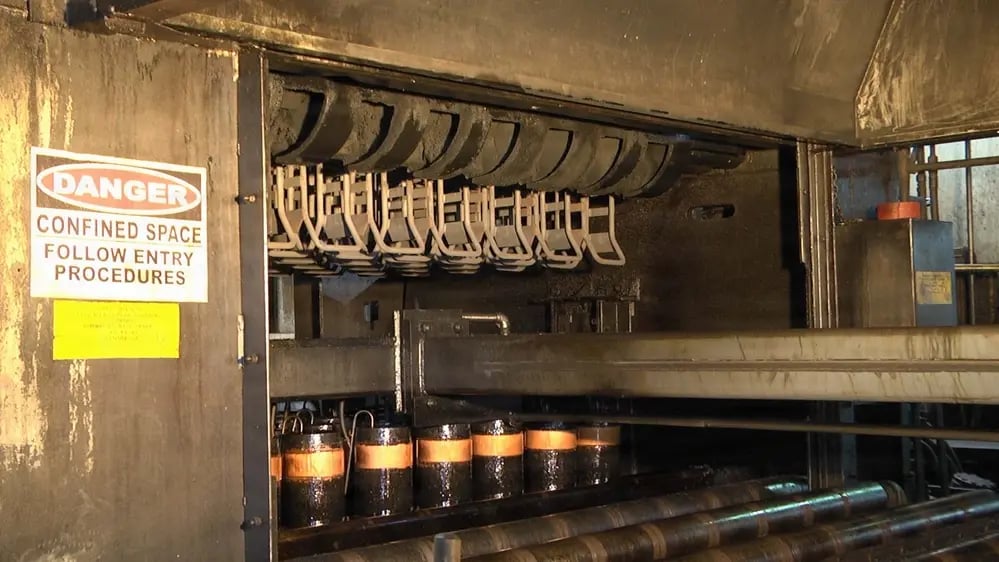
The wider picture is the same. South Korea's factories now hold 1,066 robots for every 10,000 workers, against 152 worldwide. Britain's figure in the 2022 rankings was 101, which placed it 24th and bottom of the G7. We wrote about that gap in Evolve or idle.
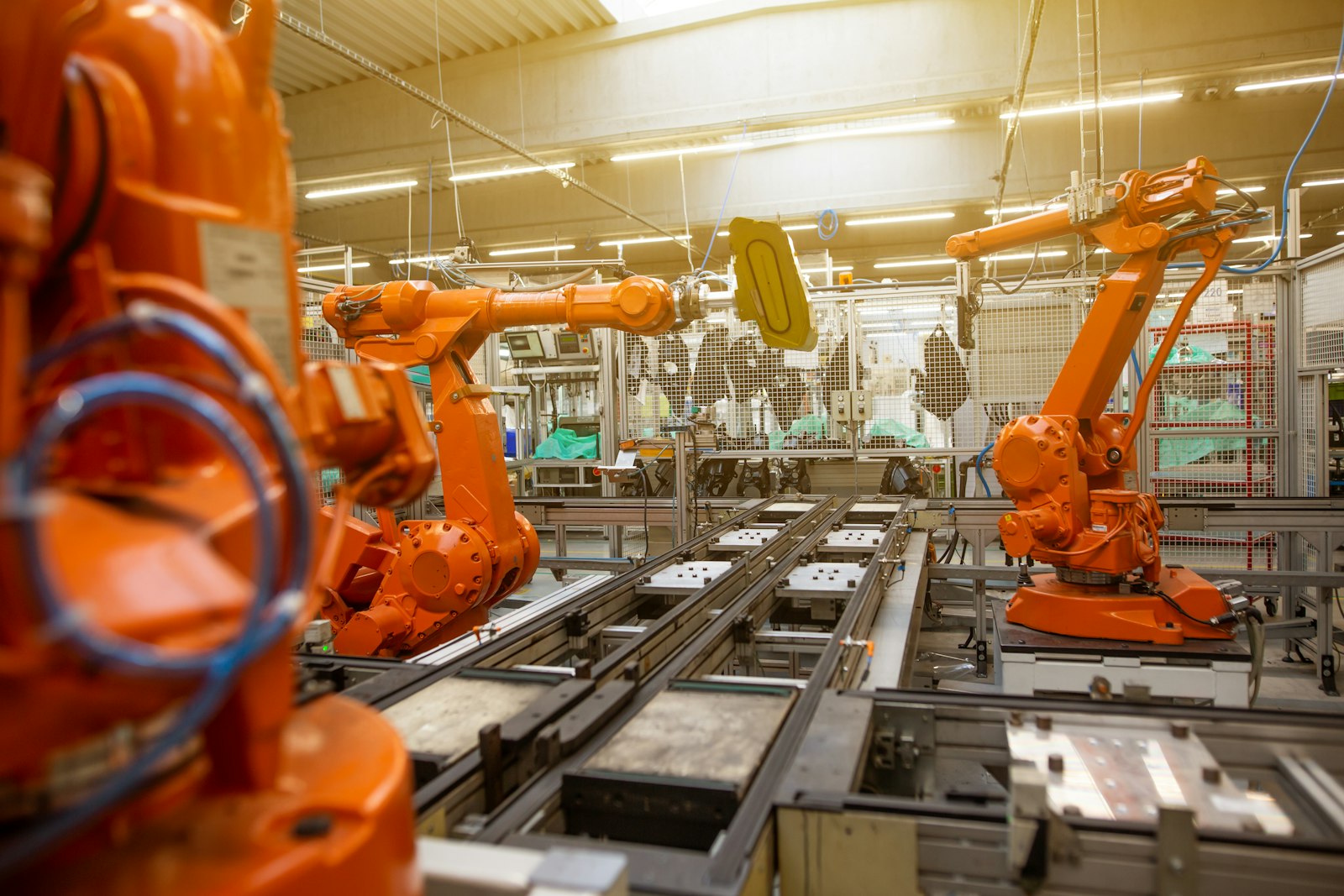
Some of the countries pulling ahead also work under rules on hours, pay and safety that we wouldn't accept. We can't beat them by copying that, and we shouldn't want to.
They built the factory twice
Nobody spends £180 million on a guess. So how do you know a factory will work before it exists?
BAE has left a clue. For an earlier explosives plant at Glascoed, it built the factory on a screen first.
Six people from design, operations and project management pooled what they knew. BAE's own CAD drawings gave the model its floor plan. On paper the plant covered about a quarter of a square mile, with buildings set well apart and a crew of 25.
Then they ran it. Two shifts, then three. More ovens, fewer pallets, a different shell type, another level of x-ray inspection. Months of production passed in an afternoon, and nothing real was at risk.
It threw up surprises. One was how the work around each process really went. Another was that, past a certain point, more equipment stopped paying its way. Project leader Phil Djali called it a virtual pilot, without the bill for a real one.
Here's the detail that matters. The imaginary factory ran on real numbers. The old line next door handled 4 tonnes of explosive a week, and its records set the rules for a plant meant to handle 4 tonnes a day.
The new shell plant is getting the same care. Friday was a ribbon, not a start: production at scale waits on a period of live trials.
So the robots came last. The records came first.
You already own the model
Most manufacturers will never have a simulation team or a nine-figure budget. They don't need one.
BAE had to build an imaginary factory to run its experiments. You have a real one, running today. Every shift is a test. Every changeover, every stop and every job is a result. Most of it goes unrecorded, so nobody learns from it.
Record it, and your own floor becomes the model. Try a change on Monday and see what it did by Friday. Move a job to the machine that suits it. Find the stop that happens every day at ten and fix it for good. Then do it again next week.
No new building. No new machines. The same people, getting better numbers out of the same kit, and knowing why.
A customer told us this after their first week: "We've measured cycle times for the first time on components we've been making for 50 years." Fifty years of experience, and one week to see it written down.
That is the opening for a factory of any size. The big players are spending fortunes to find hours. Yours are already there, on machines you've already paid for. And when the day comes to automate, you'll know exactly where it pays.
Count first, then decide
That is the work we do. A small device on any machine, of any age, shows when it ran, when it stopped and why. We measure machines, not people.
The factories that keep pace won't be the ones with the most robots. They'll be the ones that knew where a robot was worth it, and where a good operator and a machine that runs all shift was the better bet.
Glascoed ran around the clock once with 12,000 people. It's about to run long hours with far fewer. The rest of British manufacturing gets to choose how it gets there.
Start by counting the hours.
References
- BAE Systems, UK's first fully automated munitions facility opens, 20 November 2026. https://www.baesystems.com/en/article/uks-first-fully-automated-munitions-facility-opens
- BAE Systems Heritage, Glascoed. https://www.baesystems.com/heritage/page/glascoed
- Designing Buildings, Royal Ordnance Factories. https://www.designingbuildings.co.uk/wiki/Royal_Ordnance_Factories
- AMT, Lights-out manufacturing (FANUC). https://www.amtonline.org/article/lights-out-manufacturing
- Rheinmetall, Ceremonial opening of new ammunition factory, 5 September 2025. https://www.rheinmetall.com/en/media/news-watch/news/2025/09/2025-09-05-factory-opening-in-unterluess
- The Guardian, via inkl, Welsh munitions factory seen as crucial to boosting stockpiles is still yet to open, 2025. https://www.inkl.com/news/welsh-munitions-factory-seen-as-crucial-to-boosting-stockpiles-is-still-yet-to-open
- International Federation of Robotics, Robot density highest in South Korea, Singapore and Germany, 2026. https://ifr.org/news/robot-density-highest-in-south-korea-singapore-and-germany/
- Food Manufacture, UK lags behind on robot adoption, November 2022 (IFR data). https://www.foodmanufacture.co.uk/Article/2022/11/28/UK-lags-behind-on-robot-adoption/
- Haskoning, BAE Systems validates new facility proposal with Witness Simulation. https://www.haskoning.com/en/twinn/impact-stories/bae-systems-validates-new-facility-proposal-with-twinn-witness
- Defence Blog, BAE opens UK's first fully automated artillery shell plant, November 2026. https://defence-blog.com/bae-opens-uks-first-fully-automated-artillery-shell-plant/
- Featured image: women war workers in a Royal Ordnance Factory canteen, 1943. Ministry of Information, public domain, via Wikimedia Commons.